Jameson Whiskey Price in India 2026 Taste Alcohol Percentage and How to Drink
2026-03-06
.png)
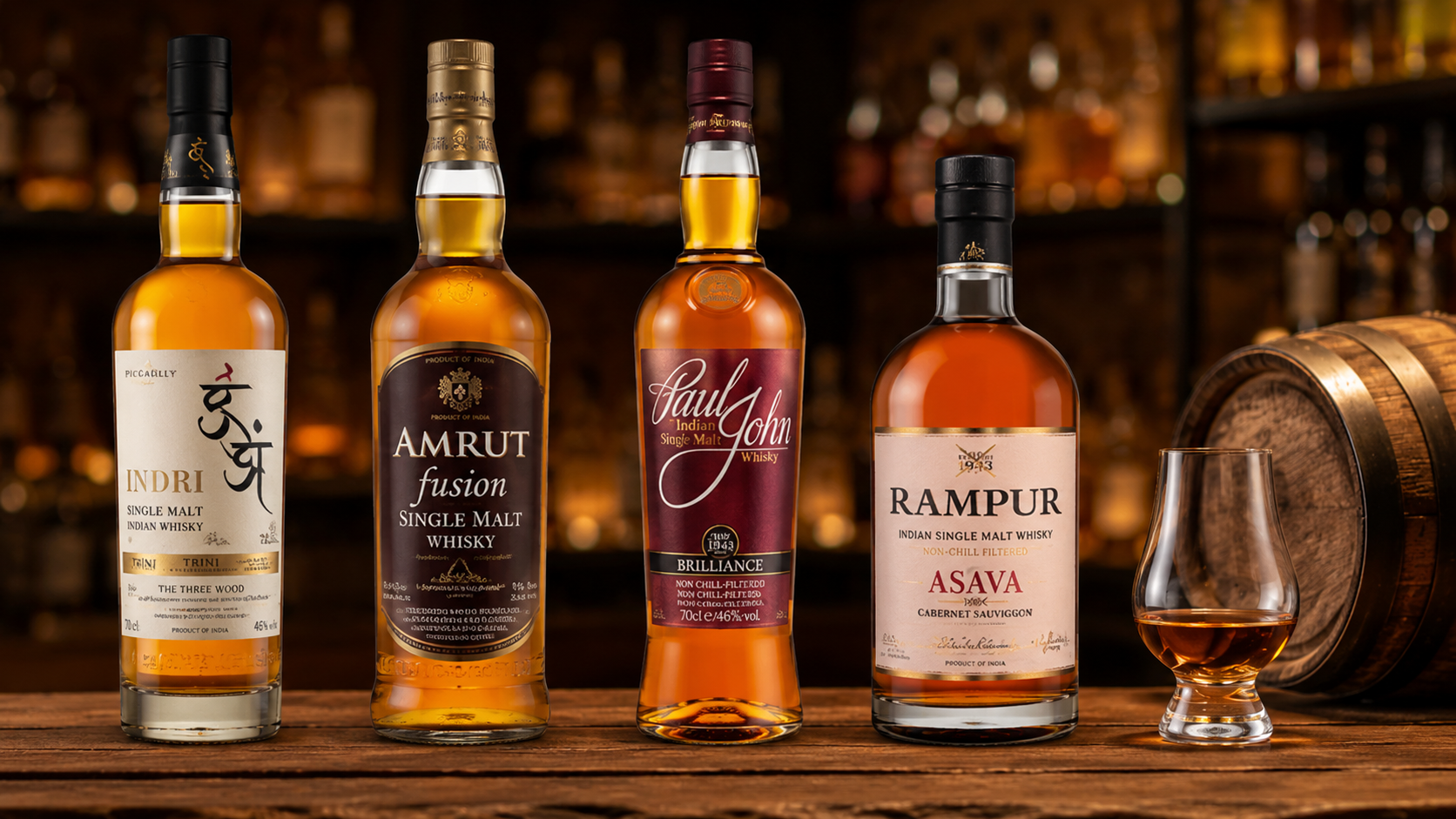
Indian single malts are transforming the global whisky industry by combining tropical maturation, six-row barley, and skilled craftsmanship to create bold, complex flavours. Brands like Indri, Amrut, Paul John, and Rampur have earned prestigious international awards, proving that India now produces world-class single malts capable of rivaling traditional Scotch.
For decades, India was primarily known for mass-producing "whisky" made from molasses, a spirit that was essentially spiced rum. But if you have been watching the global spirits stage over the last few years, the narrative hasn’t just shifted; it has been entirely rewritten.
In 2023, a seismic shock hit the industry when Indri’s Diwali Collector's Edition beat out top-tier Scotch, Bourbon, and Japanese whiskies to win "Best in Show, Double Gold" at the Whiskies of the World Awards. Fast forward to 2025, and Indri secured an astonishing 99.1 points out of 100 at the Las Vegas Global Spirits Awards.
Paul John recently took home "Best Indian Single Malt" at the 2026 World Whiskies Awards for its Port Select Cask. And Amrut, the brand that started it all, now boasts well over 300 international medals. Indian single malts are no longer the underdog novelty at the tasting table. They are the main event.
But how did a country that historically favoured cheap, molasses-based blends convince Scotland, and the rest of the world, to take its premium single malts seriously? The answer lies in indigenous ingredients, relentless craftsmanship, and one secret weapon that money simply cannot buy: the Indian climate.
If you ask any master distiller what gives Indian single malt its unique, award-winning character, they will point straight to the sky.In Scotland, the cool, damp climate allows whisky to sleep gently in oak casks for decades. Maturation in the Scottish highlands is a slow, methodical, and quiet process. In India, however, the climate doesn't nurture whisky; it aggressively wrestles with it.
Whether it is the humid, salty air of the Goan coast or the blistering, dry summers of Haryana, extreme heat forces the alcohol to interact rapidly with the wooden oak casks. This intense climate accelerates the maturation process dynamically. Master distillers estimate that one year of aging in India is roughly equivalent to three or four years in Scotland. A four-year-old Indian single malt often possesses the depth, complexity, and oak-driven richness of an 18-year-old Scotch.
But this speed comes at a heavy cost to the distillers. In whisky-making, the alcohol that naturally evaporates from the cask during maturation is poetically called the "Angel's Share". In Scotland, the angels take a modest 2% a year.
In India, the tropical heat demands a greedy angel's share of 8% to 12% annually. After just a few years, Indian distillers are left with far less liquid in the barrel. However, what remains is incredibly concentrated, bold, and bursting with flavour.
Add to this the use of indigenous six-row Indian barley, which yields a sweeter, fruitier, and more robust spirit than the two-row barley typically used in Europe and you have a recipe for a whisky that is unashamedly intense and textured.
Also Read: Best Single Malts Under ₹6000 in India 2026
The global rise of Indian single malt wasn't an overnight success. It was built on the shoulders of dedicated distillers who refused to cut corners, insisting on playing by the strictest global rules of single malt production: 100% malted barley, distilled in copper pot stills, and matured in oak casks.
Here are the four modern titans leading the charge:
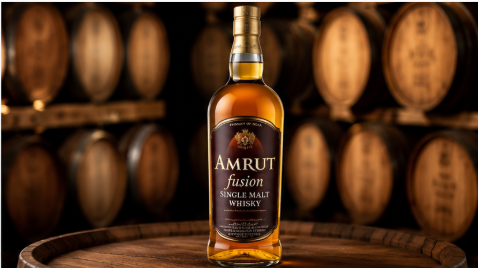
If Indian single malt has a godfather, it is Amrut. Based in Bangalore, Amrut Distilleries took a massive gamble in 2004 when they took their single malt straight to the heartland of whisky Glasgow, Scotland.They blind-tasted their spirit against Scottish legends, and the results left European critics stunned.
Amrut proved that Indian whisky belonged on the top shelf. Their flagship Amrut Fusion a brilliant marriage of Indian unpeated barley and peated barley imported from Scotland remains a masterpiece.
It offers a massive, full-bodied profile of dark chocolate, rich spice, and gentle peat smoke that consistently outscores traditional Scottish rivals in blind tastings.
Paul John: Tropical Coastal Elegance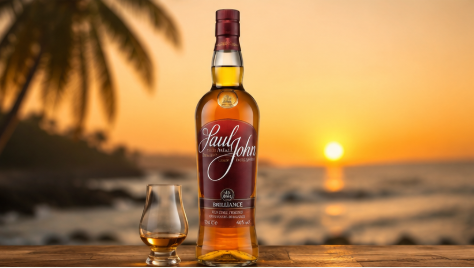
While Amrut is muscular and bold, Paul John represents the tropical, elegant side of Indian whisky. Distilled in Goa, Paul John utilizes the coastal humidity and sea breezes to create a dramatically different house style.Established in 2012, Paul John whiskies are famous for their luscious, honeyed sweetness, creamy mouthfeel, and prominent tropical fruit notes.
Expressions like Paul John Brilliance perfectly showcase this unpeated, fruit-forward style, while their peated releases like Bold offer a brilliant alternative to an Islay Scotch, delivering intense smoke intertwined with sweet Indian spice.
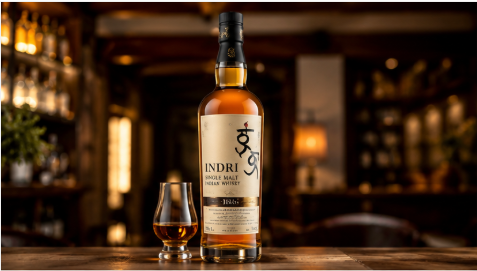
If Amrut is the pioneer, Indri is the current undisputed superstar. Launched by Piccadily Distilleries from a massive facility in the village of Indri, Haryana, this brand has taken the world by storm in record time.
Indri utilise the dramatic temperature swings of Northern India's blistering summers and freezing winters to forcefully expand and contract the wood of their casks, drawing out immense flavour.Their flagship Indri-Trini is matured in three different casks (ex-bourbon, ex-French wine, and ex-PX sherry), creating a remarkably layered profile of dark fruits, caramel, and baking spices.
Indri isn’t just winning awards; it was named the fastest-growing single malt in the world in 2024, proving that modern consumers love it just as much as the critics do.
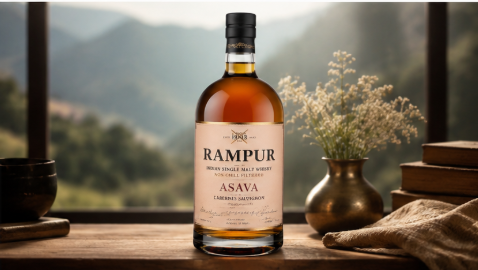
Produced by Radico Khaitan at the foothills of the Himalayas, Rampur offers a quieter, more delicate approach to Indian single malt. The cooler northern winters slow the maturation down compared to Goa or Bangalore, resulting in a highly refined, floral, and elegant whisky.
For Scotch drinkers who prefer the gentle sweetness of a Lowland or a delicate Speyside over a heavy sherry bomb, Rampur, particularly their wine-cask-finished Rampur Asava is the perfect gateway into the Indian category.
Also Read: Why a 3-Year-Old Indian Malt Tastes Better Than a 12-Year-Old Scotch
|
Brand |
Origin |
House Style |
The Bottle to Try First |
|---|---|---|---|
|
Amrut |
Bangalore |
Bold, robust, intensely spiced |
Amrut Fusion |
|
Paul John |
Goa |
Honeyed, tropical, coastal elegance |
Paul John Brilliance |
|
Indri |
Haryana |
Layered, rich fruits, deeply textured |
Indri-Trini |
|
Rampur |
Uttar Pradesh |
Floral, delicate, composed |
Rampur Asava |
For decades, the standard advice given to any new whisky drinker was to look entirely to Scotland. But the modern palate is evolving. Today’s consumers are looking for bigger, bolder flavours, and they are less concerned with a traditional 12-year or 18-year age statement printed on a bottle.
Indian single malts have completely exposed the "age trap." By proving that a four-year-old tropical malt can deliver as much complexity as a Scotch aged for two decades, brands like Amrut, Paul John, and Indri have shifted the global conversation from how long a whisky has aged to where and how it matured.
The staggering list of global awards is no longer a fluke; it is the new standard. Indian single malts are winning because they aren't trying to politely imitate Scotch.
They are leaning heavily into their unique terroir the harsh climate, the six-row barley, and the local casks. They are offering the world a distinctly Indian voice in a glass: deeply textured, beautifully spiced, and unapologetically bold.
The next time you are looking to celebrate or impress a guest, bypass the Scottish highlands and look closer to home. The best whisky in the world just might be sitting in a barrel in Haryana.